




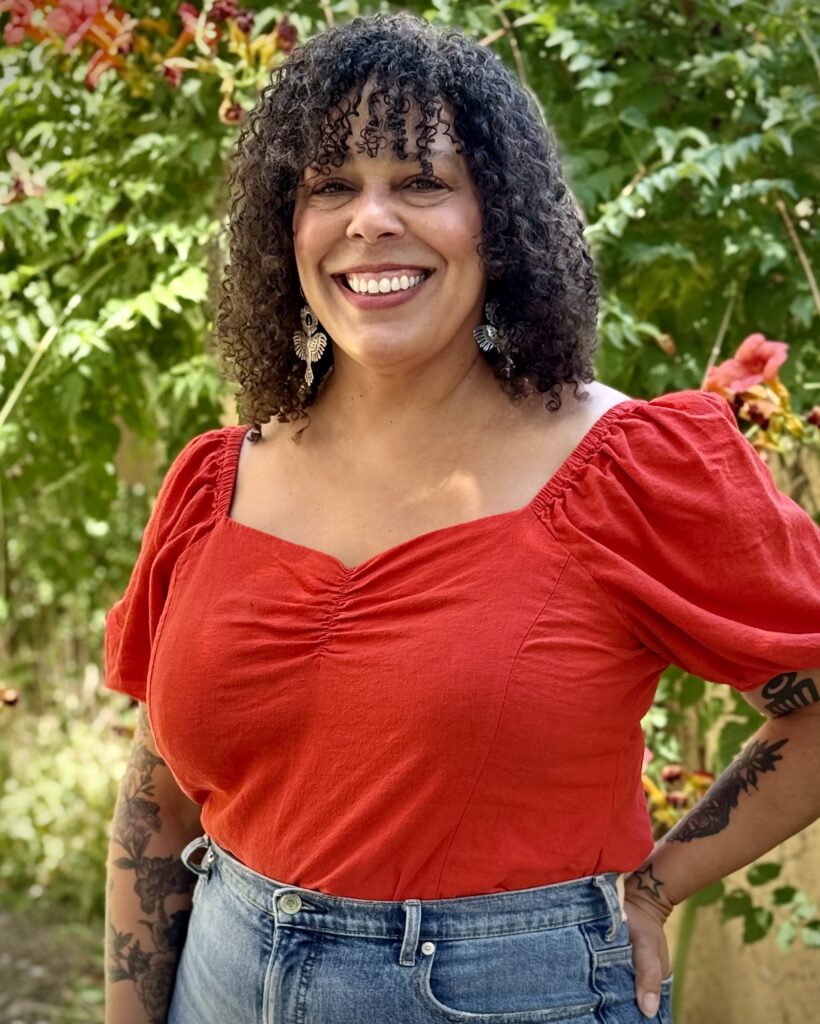
By Tanesia R. Hale-Jones, Head of School
The study of love and its utilization will lead us to the source from which it springs: The Child.
-Maria Montessori, The Absorbent Mind, p. 288
Love is and will always be brave, courageous, and radical. Montessori pedagogy is rooted in this same courageousness. At its core it is grounded in love for the child, our environments, our work/purpose, and humanity; It is rooted in community and interdependence. Even though it has been around for more than a century, it remains unconventional. Children who are educated in Montessori are raised to see the world differently. Part of this is because Montessori is fundamentally about adaptation, about allowing the conditions for young people to self-construct, and to understand their unique contribution to their communities and families.
It is notable that children and adolescents in Montessori classrooms are guided to understand the profound gifts and offerings of those around them: the adults in their lives, their peers, the more than human world, the workers, the heroes (both ordinary and extraordinary), and ancestors who make it possible for them to live fulfilling lives. This emphasis on interdependence is an emphasis on the act of loving. On seeing the way love has nourished us for generations and has been passed down. That love is a birthright and imbues our lives with meaning and purpose. Inside a Montessori classroom there is intentional emphasis on the collective good and on the sustaining power of interdependence.
“Love is more than the electricity which lightens our darkness, more than the etheric waves that transmit our voices across space, more than any of the energies that man has discovered and learned to use. Of all things love is the most potent. All that men can do with their discoveries depends on the conscience of him who uses them. But this energy of love is given to us so that each shall have it in himself.”
– Dr. Maria Montessori , The Absorbent Mind
In thinking about the world we live in, and this current moment, which requires a new courage to verbalize love as a guiding principle, we must emphasize movements centering human solidarity and justice center an ethics of love because “a love ethic pre-supposes that everyone has the right to be free, to live fully and well.” Living our best lives isn’t (or shouldn’t be) contingent on anything. Full stop. This is our human birthright: sovereignty and self-determination.
“When we are loving, we openly and honestly express care, affection, responsibility, respect, commitment, and trust.”
-bell hooks
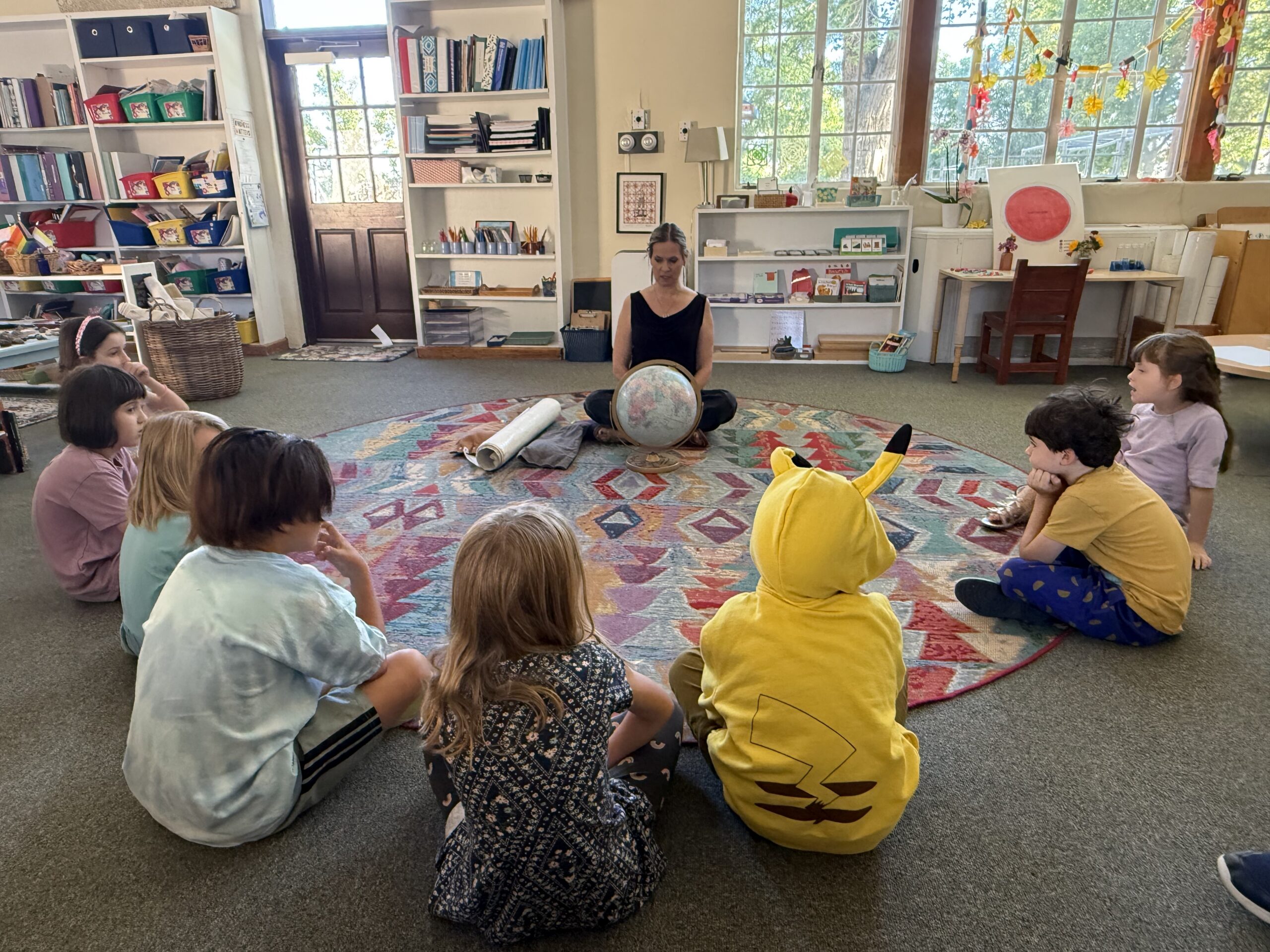
The prepared environment is a space of liberation for the child. Designed specifically for the developmental needs and characteristics of that level. Each environment, when lovingly tended to by the adult, has the potential to offer to the children and adolescents a place of beauty, order, inquiry, exploration, and the opportunity to form their personality. The prepared environment is a space curated and made more vibrant by the contributions of the people who inhabit it. Such human spaces require the individuals to learn to rely on one another, to learn to tend to one another, and to observe the needs of the environment more holistically. It requires everyone to learn to love our work and to love one another, to build trust in the process and with the process of becoming, of self-realization and self-actualization.
“I have also decided to stick with love, for I know that love is ultimately the only answer to humankind’s problems. And I’m going to talk about it everywhere I go. I know it isn’t popular to talk about it in some circles today. And I’m not talking about emotional bosh when I talk about love; I’m talking about a strong, demanding love. For I have seen too much hate. […] and I say to myself that hate is too great a burden to bear. I have decided to love. If you are seeking the highest good, I think you can find it through love. And the beautiful thing is that we aren’t moving wrong when we do it…”
–Rev. Dr. Martin Luther King Jr. from “Where do we go from here?”
How we see Love reflected and practiced in a Montessori classroom
- Love of work and learning
- Love of our students and guides
- Love of self
- Love of the animals and plants
- Love of stories of human ingenuity, resilience, and creativity
- Love of humanity/our neighbors
- Love of justice for others
“How strange it is to observe that in times like ours, when war has achieved a destructiveness without parallel, and has stretched out to embrace the farthest corners of the earth, when one would have supposed that to speak of love would be the sheerest irony, people still talk about it obstinately as ever. [Consider Benito Antonio Martinez Ocasio’s message at the 2026 Superbowl Half-Time show: The only thing more powerful than hate is love] Future plans for unity are made, which means not only that love exists, but that its power is fundamental. And today – when it would seem that everything were saying to man, ‘Enough of this dream called love: let us face reality, which is as we see, nothing but destruction; or is it perhaps untrue that towns, forests, women and children have all perished?’ – we continue to speak of reconstruction and love.”
-Maria Montessori The Absorbent Mind
Montessori presents us with the invitation to study love. To make a habit of love in our daily lives, in the way we organize ourselves. This is the love ethic that has held together communities throughout the world. That has been the courageous and unshakable force that determined ancestral survival. I invite us all to consider the many ways we might connect meaningfully with
“Love is permanent in mankind, and its consequences are felt outside the individual’s life. For, what is the social organization which goes on extending till the whole of humanity is embraced by it, if not the consequence of a love which others have felt in the centuries of the past?” (294)
Now is the time for a new kind of courage. I continue to choose Montessori because it is rooted in values around love, care, kinship, and interdependence that aligns with how I choose to live. At Escuela we make a commitment to community because within our human family we know the power of people, of mutual aid and networks of care. We experience it somatically.
Resources & Inspiration
https://breakingtheparadigm.org/p/the-power-of-love-in-montessori-environments
https://www.awakin.org/v2/read/view.php?tid=2131
All About Love bell hooks
Loving Corrections adrienne maree brownThe Absorbent Mind Maria Montessori
/